On Fire!

Hot summer days can get boring in a trailer park. My best friend Sean and I had filed away our Grade 2 diplomas in our School Days albums (well, our mothers did that) and faced down two months of freedom. Throwing ball, playing tag, exploring the forest, picking crab-apples, riding our bikes; it was all fun for the first four weeks, but now it was all getting a little old.

Sean saw it first. Well, we all saw it – the huge pile of broken-down boxes stuffed away behind the neighbour’s shed. Someone bought new appliances. Our parents complained about the eyesore (yes, trailer park people do care about their property appearances!). But Sean saw that heap of cardboard through a creative mind. He saw it as building material.

We dug into the pile like those cardboard pieces were free nuggets at a gold mine (or Mickey D’s). We had walls! We had a roof! We had a fort! We cut out windows; drew pictures on the walls with crayons; and furnished it with cushions from my mother’s couch. We ate our lunch in there, brought in board games, marbles and Pick Up Sticks.

So. Much. Fun.

We enjoyed our cardboard playhouse for one week before we were told in no uncertain terms that the fort had to go. Garbage Day (a.k.a. Fort Destruction Day) was just around the corner. What do adults have against fun? Where we saw a castle, they saw a pile of trash.

We spent the entire day in our hot, stuffy fort, knowing it would be our last. We may have used some creative adjectives to describe our parents and their unfairness. We may have even written a few of them on the walls.

Just before dinner, we reluctantly returned the cushions and the toys to their rightful homes and sat on the grass to say goodbye to our creation. I fought the inevitable tears, realizing that anger wasn’t going to change the reality that our fort was going to be curbside in a matter of hours, ready for the morning trash pick-up.

I glanced at Sean, expecting to see a similar sadness reflected on his face, but my friend had a gleam in his eyes rather than tears.

“What?”

He grinned, which seemed the strangest expression to make at such a mournful time.

“What?” I repeated.

He glanced at my trailer and the one next door before responding. “They think it’s garbage, right?”

I squinted at him, not knowing where he was going with this. “Yeaaah?”

“Let’s get rid of it ourselves, then.”

I rolled my eyes. “I think they’re expecting us to take it apart and bring it to the road, Sean. My Dad said we have to clean up our own mess.”

He looked around again, causing my heart to speed up a little. He was making me nervous.

I threw my hands up. “What?!”

He shushed me and whispered his idea in my ear, even though there was no one within listening range. “Let’s burn it.”

My eyes bulged. “What?”

“Let’s set it on fire!”

I was suddenly looking around too. “You’re nuts!” I hissed. “How are we going to set it on fire?”

PAUSE STORY HEREHow? I asked how? That was my concern? Let me remind you, I was only seven. CONTINUE.

Sean ran home and returned with a box of matches from his kitchen drawer. We weren’t finished having fun with our fort after all.

He showed me how to drag the tip of the match across the side of the box to create the flame. It made me jump every time, and I was too scared to try it myself.

“I might burn my fingers,” I said, as he lit another and held it to the bottom of the fort. Walls 1 and 2 were already burning slowly.

“You won’t,” he said with a pyromaniac’s confidence, even as I waved off the opportunity.

There wasn’t much wind in that corner of the yard where the fort stood, wedged between the side of our shed and the neighbour’s trailer. Therefore, the fire creeped upwards at a snail’s pace; nothing to worry about. It was small and contained, but was creating a lot of smoke.

Sean waved a window-square of cardboard at the fort to try and get rid of the smoke. We didn’t know anything about fanning a fire.

Yet.

But it was a learn-by-doing experience, as we watched the flames grow bigger. Heat was mingling with the smoke which stung our eyes and made us cough.

Sean wasn’t smiling anymore, and my own heart was pounding frantically. We both took a step back as if we were tied together for a three-legged race.

Suddenly, the neighbour whose trailer bordered the back of ours blasted out of her side door with a bucket of water, screaming, “Fire! Fire!” She doused the fort with the water, pushing both Sean and I out of the way. So much yelling.

“Get your mom!” she screamed as she ran back to her trailer for a refill.

My mom? I couldn’t tell my mom. She’d kill me. She was feeding my baby brother, and there was no way I was troubling her with this.

Sean was pulling on my arm. Away from the fort. Away from the yard. But I was frozen, wondering what I should do.

“Let’s get out of here!”

I stared at my friend. We couldn’t just leave, could we?

He yanked on my arm again, and suddenly we were running down the road like arsonists, criminals, escaped prisoners; laughing and hooting that we had gotten away with it.

Seven. We were seven.

The fire was put out. The shed was saved. The neighbour’s trailer didn’t burn. Yet, I wasn’t allowed to play with Sean for a long, long time. Parents can be so unfair.


Not my proudest moment on Val’s Stage, but we’ve all had those, I’m sure.

While I do love a scented candle, a nice bonfire, or fireplace flame, I’m not a pyromaniac. Yet, fire is intriguing, isn’t it? This intense energy holds the power to take down a building in minutes or rage through a forest, destroying everything in its path.

Humans didn’t create fire, though. They didn’t even discover fire. That powerful, intense energy was here long before the Earth was populated with humans.

The God of Fire

Look up fire god on the Internet. Wikipedia lists 102 fire gods originating in areas all over the world. Oddly, the God of the Bible doesn’t make that list, even though He was involved in an exciting fire contest between gods which is recorded in that ancient book. The story (found in 1 Kings 18) goes that a bunch of prophets wanted to prove whose god was the greatest by asking them to rain down fire on their altar. So, 450 prophets of Baal and 400 prophets of Asherah cried out, danced, prayed, and cut themselves with their swords, requesting their gods to light their altar sacrifices. They spent the whole day carrying on like this while the flies buzzed around their rotting meat.

Elijah, the prophet of God, finally took his turn. He raised the stakes. Elijah soaked his sacrifice and wood with 12 large jars of water, creating a moat all around the altar. He prayed the following simple prayer:

“O Lord, God of Abraham, Isaac, and Jacob, prove today that you are God in Israel and that I am your servant. Prove that I have done all this at your command. O Lord, answer me! Answer me so these people will know that you, O Lord, are God and that you have brought them back to yourself.”

1 Kings 18:36-37

Do you know what happened? The fire of God fell from Heaven and not only burned the offering; it burned the wood, the stones, the dust and all of the water. That’s an intense energy of power!

This same God appears as fire a few times too. He spoke to Moses out of a burning bush, led the people of Israel through the wilderness as a pillar of fire at night, and His Spirit appeared in flames of fire on the New Testament believers. Now, that’s a God of Fire!

I’m on Fire!

Think of the ways we use the phrase, “I’m on fire!” I say it when I’m doing really well at something. I just slammed the tennis ball outside of my opponent’s reach – “I’m on fire!” I had a great idea that proved successful at work – “I’m on fire!” I prepared three outstanding meals in a row – “I’m really on fire!” I’m usually proud of myself when I say it. I’ve accomplished something great; I feel full of energy and power.

Did you notice how many ‘I’s that involved? It’s all about me.

What would change if I added two words to that phrase: for God? “I’m on fire for God!” What would that mean?

That would mean exhibiting more love, joy, peace, patience, kindness, goodness, faithfulness, gentleness, and self-control. It would mean offering forgiveness. Who do those things benefit? Myself? No. Being on fire for God is taking the focus off myself and looking for ways to serve others.

That’s worth investing in with some intense energy.

I want to be on fire for God. Don’t you?

“No one has ever seen God. But if we love each other, God lives in us, and his love is brought to full expression in us.”

1 John 4:12

Hiding My Fall

The warm breeze caressed my face and bare arms as I pedaled. Smooth was not a word I’d have used to describe this ride on my old bike. But, hey! My old bike didn’t have shocks like these. Despite feeling like the seat had been adjusted too high for me, (away from the stops at intersections) I was sailing. Smoothly.

I never knew biking could feel so good. My memories of riding bike involved a sore butt and tingling fingers. It was never a pleasant experience. Oh, but now. Dreams of long bike rides for picnics and sightseeing danced inside my new merlot-coloured helmet. This was a whole different cruise port!

I stopped to take a selfie. I posted it on Instagram with the caption, “Maiden voyage home on my new wheels!” My smile was big. I was king of the world!

Just outside my condo complex, I had to ride on the sidewalk leading up to the gate. An elderly gentleman piloted his walker ahead of me, at more of an air-balloon-speed. I slowed and rode off the sidewalk onto the grass to go around him. His wife smiled and thanked me for respecting his space.

I went a meter or so ahead of him before reentering the sidewalk, not wanting to cut him off. I didn’t see the gap between the edge of the concrete and the ground, masked as it was with the green grass, until my tire wedged there, parallel to the sidewalk, and refused to go any further. If my seat had been a little lower, I might have caught myself. But this was not the case. We both went down – me and my brand-new bike. The concrete was far from cushiony, and my pride took a huge blow too.

Mr Walker’s wife was now concerned as I popped up like a jack-in-the-box repeating a curious phrase: “I’m alright. I’m alright.” Curious, because I wasn’t sure if it was true.

I walked my bike the few meters to the gate, testing out my legs. Kids fall off their bikes all the time, right? Once inside the grounds, I got on and rode it into the garage. Everything seemed fine – both of us.

I locked my new bike on the wall in the bike room and looked for damage. I wiped each scuff off with a gentle brush of my fingers. I breathed a sigh of relief – no real damage done. Just a terribly embarrassing moment.

In the elevator, I decided not to tell anyone, unless the road burns and bruises became too noticeable to ignore. I went about my day, watching the bruises darken and feeling a strange pain in my arm when I moved it a certain way or lifted something heavy.

We weren’t finished bike shopping just yet, however. The sales guy at the store had informed Hubby that their other location might have the male version of my bike in stock – just one, of course, so speed was of the essence. The pandemic was great for bike sales in this city. I encouraged him to get the bike, since the first shopping expedition had actually been a search for a bike for him. How did I end up coming home with one??

We plucked a few more leaves from the money tree and bought a new bike for Hubby too. What a day!

“Let’s plan a picnic!” I said excitedly.

I picked up some wraps, a veggie and hummus tray, and a bag of kettle chips. We set out with our backpacks bulging with the food, drinks, a picnic blanket and a deck of cards; all the picnic essentials.

The paths behind our condo go for miles along the Rideau River and are ideal for biking. And it was late enough in the evening for the foot and bike traffic to have thinned. I took the lead and sailed down the trail, happy that my earlier spill was a thing of the past, and my bike seat was now a couple inches lower.

Yes! This was the feeling I had just before my selfie. Just before my fall.

Behind me, however, Hubby recommended changing my gears to be even more comfortable. I was doing a little more coasting than necessary. To be honest, I’d only used about four of my 21 speeds on my old bike, because I hadn’t really learned how to use it properly.

I suggested we pull off in the next clearing. I handed my bike to Hubby, asking him to change gears for me, and then to show me how he did it. He rode a few meters away, the bike making unnatural grinding sounds as he worked the gears. There was an unhealthy SNAP! which threw everything into silence. Hubby’s face was the first clue that something was terribly wrong. The fact that he dismounted and lifted the back wheel off the ground while pushing the bike back to me was the second.

Not only was the chain dangling, but the whole gear mechanism hung off the bike. On closer inspection, we saw that a metal bolt had actually broken in half!

Shame hit me like a snapping bolt as I realized that he blamed himself for breaking my new bike. I confessed immediately, of course, admitting that I had had an accident earlier that day which likely caused this. Always loving and supportive, he tried to make me feel better by putting the fault elsewhere – the bike wasn’t made well, the parts were cheap, and/or he’d been too aggressive with the attempt to change gears. But deep down, I knew.

We pulled out the blanket and had our picnic in the clearing which, while not our original destination, had a lovely view of the river. I didn’t have much of an appetite, however, and playing a game of cards was no longer on the agenda.

Hubby rode home and drove the SUV back to meet me. He picked us up as the sun bid the day farewell, and we took my broken bike home in the back of the car.

At the bike shop the next morning, the service guy, an expert on bikes, having done a full inspection less than 24 hours before on my bike, knew that it had been involved in a trauma. My fall had caused the breakdown. He claimed he could fix it, but it’s been a full week since we left it with him. I can’t help but feel like I’m being punished for hiding my crash.


My mom used to quote a verse to us when we were younger: “Be sure your sin will find you out!” (Numbers 32:23). I never knew what the context of that verse was, but what it meant in our house was that we couldn’t hide our wrongdoings for long. I was sure my mother had supernatural qualities that helped her know everything. Hiding was useless. And, since moms are always right, it was true in this case as well – not a sin, but a fall, a slip-up, a failure.

I’m also reminded of a story that I had on a children’s record, told by a lady named Aunt B. The little boy found a baby snake and, despite being told to get rid of it, he kept it in the family’s barn. He fed it and cared for it, in secret, until it was fully grown. Then one day, the snake attacked his little sister, and she nearly died.

When the mother realized he had disobeyed and kept the snake, she quoted James 1:14-16:

“But each person is tempted when he is lured and enticed by his own desire. Then desire when it has conceived gives birth to sin, and sin when it is fully grown brings forth death.”

English Standard Version

As Christians, when we fall off our metaphorical bikes, we can’t torture ourselves too badly when gravity (our sinful nature) plays a big role in our crashes. We mess up. We don’t try to fail – we don’t set out to do that – but sometimes we fall. We get up, brush ourselves off, and insist that we’re okay. And on the outside, we might look okay.

Yet, like my bike, that action can weaken some important unseen parts and, if they’re not dealt with properly, a second stressful event could destroy me. Hidden sin can grow and become lethal. And, while my mother may not really have supernatural powers, my heavenly Father does, and He sees that first fall, whether I admit it to Him or not.

We’d also like to think that we can handle things on our own – sweep things under the rug, so we can deal with them independently. No one needs to know I messed up. While it looks like we’ve got it all together, we are not doing ourselves a favour to shut out our Father. He’s not going to be disappointed in us for falling – He’s going to be happy that we asked for His helping hand to pick us up.

Jesus came to save me from myself. I slip. I fall. I fail – well, I feel like a failure. I forget that I don’t have to be perfect to somehow earn acceptance from God. In my new favourite book, Grace for the Good Girl, Emily P. Freeman says, “We believe our mistakes discredit, our failures disqualify, and our lack proves our worthlessness.”

No! In her chapter on forgiveness, she says:

“With Christ, we can release the right to be perfect and never mess up. We can release the right to pay for our own failure. And we can release those around us from having to pay for their failures as well.”

So, instead of hiding my sins and letting them grow into bigger problems, I quickly talk to my Dad. He loves me unconditionally, gently placing a band aid on my boo-boos and holding me in his lap while I confess my slip-ups. He repairs my bike and encourages me to get back on.

Who wouldn’t want a Father like that?

“God is good, a hiding place in tough times. He recognizes and welcomes anyone looking for help, no matter how desperate the trouble.”

Nahum 1:7 The Message

“I’ve thrown myself headlong into your arms – I’m celebrating your rescue.”

Psalm 13:5 The Message

The Game of Life

It’s Friday night. Work is done for the week and it’s time to take a break. If you’re like me, you might enjoy getting out a board game or a deck of cards and making it a Game Night!

Chance

Do you remember Hasbro’s The Game of Life board game? Each player gets their own little car. You stick a peg in the driver’s spot, spin the wheel, and major life events happen to you. You might go to college and earn a degree; you might get a great job and make tons of money; you might get married and have children; or you might not do any of those things. Everything depends on the spin of the wheel – it is a game of chance.

This reminds me of Doris Day’s song, Que Sera Sera – whatever will be will be. That sounds like a risky way to view life! I’ll just roll with the punches, take things as they come, let Nature take its course, take my chances.

Admittedly, it’s much easier to concede defeat in a game of chance. When you lose in a board game or card game in which your advancements or points are solely tied to the roll of a die or the spin of a wheel, you are relieved of blame for a loss. There is no shame in losing when Lady Luck is in charge. This is the type of game many of my Kindergarten children would prefer to play. “It was just a game of chance; right, Mrs. Val?” Right. The loss has no reflection on your intelligence or skills.

Strategy

Some games such as Mattel’s card game Skip-Bo require some strategy, in addition to the luck of the draw. Picking up the right cards is necessary for a win, but things go better when you are educated on how to play the game, and you use some tactics such as holding onto cards until it’s most advantageous, using your wild cards wisely, blocking other players from succeeding, and strategically placing cards in your discard piles to aid in your future goals. Luck plays a role, but a loss carries with it some responsibility – maybe I could have played better.

When compared with life itself, this type of game is a little more realistic. You use strategy to make things happen, but there’s still elements that are beyond your control: what part of the world you were born in, with its social systems including access to health care and education; your family’s socio-economic class; the stability and support of your family unit; and, yes, race and gender too.

Skill

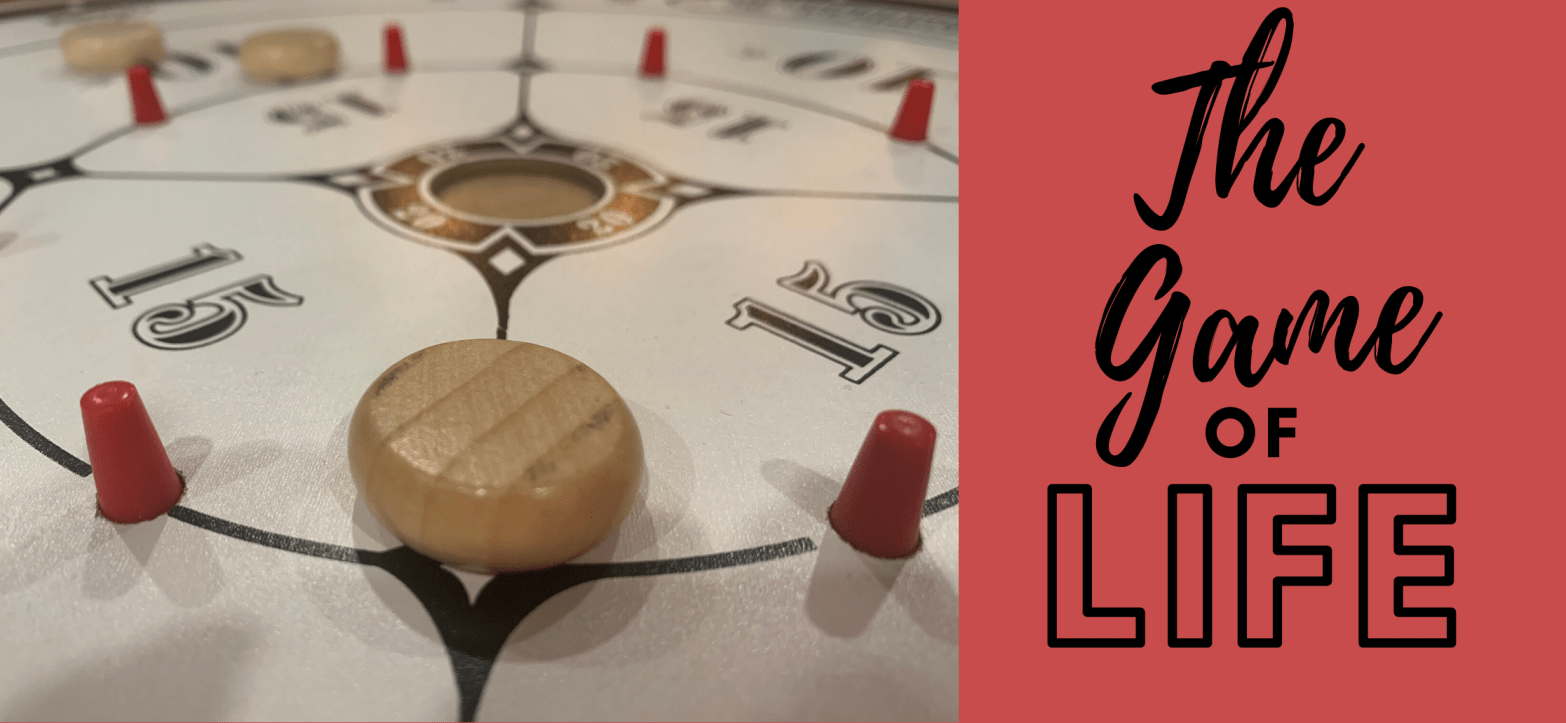
You may or may not be familiar with the hands-on game Crokinole. Ontario-made in the 1800s, this wooden game board hides forgotten in a dusty corner of many homes and cottages. Crokinole has rules similar to curling with players flicking small wooden buttons with their fingers on a round board with pegs and a hole in the centre. The goal is to knock off your opponent’s buttons, while keeping yours in the highest scoring areas of the board. Your chance of winning is much more reliant on skill attained through practice. There are definite handicaps such as my friend’s developing arthritis or my long gel nails (I don’t compare those as similar issues, other than making it difficult to play with accuracy!). Crokinole is a game in which a player can easily get frustrated and tire of losing to a more skilled opponent. For this reason, I no longer play with Hubby unless we’re playing “teams” with another couple! (I still play tennis with him because we are equally amateurish at that!)

Some people are born with skills and talents which make them better suited to succeed in certain areas. Someone with exercise-induced asthma is not likely to be a professional athlete. Someone with short, stubby fingers might not be suited to be a master pianist.

Some skills can be learned, however, and a bit of hard work can create success. High school graduates register for college courses and walk out a couple years later ready to start careers in fields they knew very little about when they started. Almost anyone can be taught how to sing. You can learn to dance apparently – I don’t think I can, but that’s just me. Even what looks like a handicap can sometimes be overcome, such as a small hockey player using speed and agility to make up for size.

After the education, however, practice is needed before the skills are mastered. Before you really play the game well.

House Rules

Every game comes with Rules of Play. Each player must learn the rules, and adhere to them, in order to play the game as the creator meant it to be played. When playing a game at a friend’s place, however, sometimes you need to be aware of certain House Rules. Despite the fact that there is a set of finite instructions written in the accompanying documentation, some people agree on modifications to rules. As long as everyone accepts the changes, all is well. However, if the House Rules aren’t stated up front, disputes can occur.

In Kindergarten, we talk a lot about rules and why there is a need for them. Most rules in society are there to keep us safe and to maintain order. We may not always agree with them, but in most cases, the rules are made with our best interests in mind.

Life – The Real Deal

On my stage as a Christian, I don’t believe that my life is a game of chance. If I attribute everything positive to luck, and blame everything negative on bad luck, I take no responsibility for my own actions. I’m just a small ‘Cruiser’ on a Battleship game board. If I’m lucky, my opponent won’t use any strategy and my ship won’t get hit by a missile.

No, in my mind, when good things happen to me, I am blessed, I am thankful, I am given a wonderful gift. I know where to turn my grateful heart:

“Whatever is good and perfect is a gift coming down to us from God our Father, who created all the lights in the heavens. He never changes or casts a shifting shadow.”

James 1:17

Do I point my finger at the devil for my hardships? That’s a bit trickier. There’s no doubt that Satan wants to see me lose this game; that he’d love for me to give up. He’s likely responsible for some of the bad stuff that happens to me. But nobody ever promised life would be all sunshine and roses, even when you believe in a loving God. Sometimes my Father allows me to go through difficult things so I learn to depend on Him more. Sometimes I make bad choices and suffer the consequences. Sometimes, I don’t understand things at all – why bad things happen to good people (why hundreds of thousands of people die in a global pandemic, for example). But I believe that the Director of my life sees the big picture. I don’t. Whether I understand or not, luck has nothing to do with it.

Like the games which require strategy and practice, I learn the rules in life, and I work hard to follow them. I need to spend time reading the Christian’s rule book – a fairly thick manual called the Bible. The more familiar I become with it, and the more I practice loving God and loving other people, the more confident I can be that I’m playing the game well.

While I don’t have to work to earn God’s love, He blesses those who do their best. I don’t expect large houses and fancy cars to magically appear if I spend my whole life lying around reading romance novels and eating candy, no matter how appealing that may sound.

“Never be lazy, but work hard and serve the Lord enthusiastically.”

Romans 12:11

“You will enjoy the fruit of your labor. How joyful and prosperous you will be!”

Psalm 128:2

Labor. Work. God rewards people who work hard. However, one of the more important criteria on His pay scale is love. If I work night and day with the desire to be rich and powerful, but mistreat others to get ahead or ignore those who love me, He may not bless me in the way I’d hoped. As His child, I want to make my heavenly Dad proud and continue the reputation that goes with our family name, and that includes my work ethic. If that means teaching in the classroom in the fall with its COVID-uncertainties, or online, or a combination of both, I will do the best that I can, with God’s help. Working from home, as many of us have been forced to do, comes with a different type of commitment. With no one there to supervise, it’s much easier to goof off with that romance novel when I should be working. Ah, but I do have an all-seeing Supervisor, don’t I?

“Commit your actions to the Lord, and your plans will succeed.”

Proverbs 16:3

When I put my trust in my Father and I believe that He knows what’s best for me, I won’t modify His guidelines to create my own House Rules. He loves me and wants me to live the best life possible. And in the end, I will be a winner.

“But thank God! He gives us victory over sin and death through our Lord Jesus Christ.”

1 Corinthians 15:57

Victory! Yes! And what’s the prize for winning this game? Just eternal life and a home in Heaven.

I’ll accept that.


Is your life a game of chance, strategy or skill? Whose rulebook do you play by?

Fact or Fiction?

Another heatwave. Welcome to July in Ottawa. Last year, we had our own inground pool to get us through the hot days. This year we have a shared condo pool with limitations and covidian rules. Some days we don’t get to set foot inside the iron fence at all. It’s our own fault for downsizing and moving into resort-style living B.P. (Before Pandemic).

One day this week, Hubby and I looked forward to our one-hour turn poolside. Our only booked slot in a three-day stretch, we were timing things down to the second so we could enjoy every one of those sixty minutes. We’d eat lunch before we go, have our bags packed early, and allow plenty of time for the elevator.

I dialed the number to the guardhouse to book our time for the next available day, not wanting to have another string of no-pool days. Expecting the normal automated answer with menu options, I was surprised to hear ring after ring with no response. After three such attempts, I decided the answering machine was not at home. More drastic measures needed to be taken to secure our spots poolside. Someone else was likely booking the last slots as I sat there with the phone to my ear.

The security guard met me in his gatehouse door at the entrance to our condo parking lot, masked and ready to pencil in our names.

“This is a rough way to book time at the pool,” I half-joked.

He checked his book. “The next available time is Friday.”

I groaned. Another day of heat wave with no pool.

As he recorded my information for Friday, I chatted away, suspecting the man might be lonely in his little isolation booth. I commented on the rumors I’d heard that management was considering changing some of the rules to give us a better opportunity to maximize occupancy on the pool deck; allowing drop-ins if people didn’t show up for their booked time.

He shook his head. “I don’t know. They’re really strict about the rules.” He pointed toward the pool area with his pen. “In fact, they’ve shut down the pool for the entire day because people weren’t following the rules.”

My heart sank as I digested this bit of news. “Today?”

He nodded. “Yep. They shut it down for the rest of the day.”

Disappointment turned to anger. “What rules were they breaking?” I couldn’t think of anything a group of nine adults could possibly do to warrant closing the pool and punishing everyone for their sin. Were we in elementary school? Should we call everyone to the gym to be lectured by the principal?

The guard leaned in to impart his knowledge, his mask making him fearless of my proximity. “Apparently, people stayed longer than they were supposed to, so too many people ended up being in the pool area at once.”

My voice went up an octave. “And they closed the pool?”

“Yep. They take the rules seriously.”

I shook my head in disbelief. “Wow.” What else could I say? I thanked him for his help with my entertainment schedule and headed back, my anger growing with each step.

Seriously? We’re missing out on our enjoyment because someone else was selfish and showed disregard for others…

A small group had gathered near the entrance of one of the condo buildings. I recognized the superintendent as one of the assembled.

“Is this an organized rebellion?” I asked, pushing a smile past my frustration. “Did they really close the pool because someone broke the rules?”

I saw confusion in their squinty-eyed stares. They must not have heard. I relayed my story to them, repeating the guard’s explanation.

Before I finished, one of the ladies was shaking her head, not with indignation as I expected, but in denial. “No, that’s not why the pool is closed,” she refuted confidently. “It’s closed because the phone lines are down. They’re not allowed to operate the outdoor pool without a direct line to emergency services.”

She addressed the super standing next to her. “You need to tell the guard. He’s spreading untruths and making people upset.”

He obediently removed his walkie-talkie from his belt and informed the guard of the situation. And it was over, just like that. There was no argument against a city rule imposed for our safety.

I had to lay down my anger and leave it on the cement curb – not an easy task when my body had assimilated the emotion so well. I’m not even sure I thanked them for clarifying things and imparting the truth.

As I walked back to my own building, my disbelief in the situation had jumped from the injustice of the condo management company (and the life guard on duty) to the discomfiture of having believed the story I was told by someone I felt had authority. As preposterous as it seemed, I accepted his version of events because I trusted that he should know the truth.

This blind acceptance of “truth” applies to so many things. As we navigate through the global pandemic, we put our trust in those who inform us – the medical experts, scientists, journalists, and politicians. They should be “in the know.” We often listen to their knowledge and accept it as facts, with no further evidence to support their words.

Our tendency to assign credence to Science, and those who study it, can cause our belief system to be shaped by their explanations and theories; even as it pertains to our very existence – the origin of life and the acceptance or rejection of an all-powerful God as creator.

In Romans 1:19-20, the author Paul is amazed that anyone viewing His creations could deny the sovereignty of God:

They know the truth about God because He has made it obvious to them. For ever since the world was created, people have seen the earth and sky. Through everything God made, they can clearly see His invisible qualities—His eternal power and divine nature. So, they have no excuse for not knowing God.

Yet, a Google search of creation will bring up articles such as Charles Q. Choi’s “7 Theories on the Origin of Life” (2016, livescience.com). According to Choi, explanations of how life began on Earth range from lightning sparks, clay crystals arranging themselves, deep-sea hydrothermal vents, glacier preservation, molecules spontaneously rising out of the Earth, to space rocks falling on our planet carrying Martian microbes. Even then, all of these magical beginnings do not explain how the Earth ended up with the variety of living things that exist in plants, animals and humans. Many people believe Charles Darwin’s Theory of Evolution stepped in to form human life from the correct humble accident listed above and accept this as more plausible than a supernatural creator of all living things.

We highly regard scientists with their intellect and knowledge from research, and often accept their theories as truth. Is it more ridiculous, though, to believe that a supernatural being created all life than believing that random molecules organized themselves into life, whether under a glacier or in the sky?

I choose to believe the Bible.

So, God created human beings in His own image. In the image of God He created them; male and female He created them.

Genesis 1:27

The beauty and balance of creation: the planets, stars, moon and sun; the land and the water; trees, grass and other plants; animals, fish and birds; they all speak to the glory of their Creator.

The heavens proclaim the glory of God.
The skies display His craftsmanship.
Day after day they continue to speak;
night after night they make Him known.
They speak without a sound or word;
their voice is never heard.
Yet their message has gone throughout the earth,
and their words to all the world.

Psalm 19:1-4

After each day of creation, God acknowledged that what He did was good. It is not a stretch for me to believe that God then created humans. And when He surveyed all of His creation, with these most special beings at the end – His crowning accomplishment, He “looked over all He had made, and saw that is was very good!” (Genesis 1:31)

We were created to have intelligence to be able to choose who to believe. When I look closely at a beautiful cardinal, smell the sweet perfume of a wild rose, or feel my heart race in my chest, I can’t help but thank God for purposely making all these things. And making them very good.

Who do you listen to? What do you believe?

Discretion is Advised

The room smells of freshly-popped buttery popcorn as we put our feet up and settle into our spots on the couch. It’s the top of the hour on a Saturday night and we hope to find a movie to watch. Before a title appears on the screen, however, a warning banner pops up: Viewer discretion is advised. The words included with the cautionary signage describe the types of offenses we are likely to see or hear: coarse language or humor, violence, nudity… these descriptors varying depending on the movie. Some would call this ‘adult content’ or ‘mature content’.

With the warning comes a decision. Do we accept the terms and decide to watch this movie or do we change the channel and search for something more appropriate? There are no young children present, so the choice has different factors than it might for others. How did our plans for a relaxing evening at home just become a moral dilemma?

What is discretion anyway? Merriam-Webster says it’s “the ability to make responsible decisions” (‘responsible’ being a loaded word here). It’s “an individual choice or judgement.” But the movie warning doesn’t tell us how much coarse language there is. Maybe there’s an oath dropped once or twice during an especially trying time. How much violence is there? Does someone get punched in the face or does someone lose their head? What does nudity refer to? Do we see someone from the back or front? I don’t feel qualified to make a judgement with so little to go on.

The dictionary also includes the word ‘circumspection’ in its definition. I look up a definition of the definition to find this means being “careful to consider all circumstances and possible consequences.” What are the consequences of watching a movie with coarse language, violence and nudity? I might be offended. Once the words or images appear on the screen, I can’t unhear or unsee them. But that’s my choice. I was warned. I used my discretion to make the decision to watch it anyway. I have no grounds to complain about the offensiveness of the content.

There are many areas of our lives where discretion plays a role. We make decisions daily based on personal judgements. We cancel our picnic as we notice the dark clouds rolling in. We wear our masks to the grocery store even though it’s not mandatory. We stop to check the air in our tires because the ride seems a bit bumpy. Sometimes these choices seem obvious based on the situation. But other times, discretion is about choosing our words carefully. Do we use our words responsibly, considering the possible consequences?

A few years ago, my husband and I explored St. Thomas through a guided bus tour. The local guide was very informative, chatting as we traveled about his country’s history, culture, and way of life. His experience in the role came through in the smoothness of his speech and the timing of his anecdotes; to be able to point out the window at the exact moment to view something without having to interrupt a story. He was able to communicate well in many of the languages represented by the tourists, including English, French and Spanish.

The atmosphere in the air-conditioned coach bus was light, as it should be when on vacation, as we enjoyed the scenery and listened to his stories and knowledge of the area. We snapped blurry pictures through the tinted windows like everyone else.

The guide appeared friendly; smiling at people, joking with some, and welcoming questions. As he talked about their education system, he had my full attention. It’s always interesting to me as a teacher to learn about how schools operate in other countries.

“How many kids would typically be in a classroom?” I asked, thinking of my 30 students back home.

He looked at me with no smile and replied, “Kids? We call our little ones ‘children’, not ‘kids’. Kids are baby goats.”

He went on to answer my question about how many children might be in a class, but I’m not sure I heard the response. The information he gave is certainly not what I remember about that tour. My face burned with embarrassment as the bus went silent as a result of his tone. The Canadian teacher had been reprimanded for her inappropriateness and put in her place.

This was not a language issue or a cultural issue. The guide knew what I meant. I’m sure I was not the first tourist to ever call children kids. Was I the only one chosen to be taught a lesson?

Just behind his head attached to the bus wall was a sign reminding us to tip our guide well because his livelihood depended on our generosity. Yet, it seemed that he momentarily forgot discretion. He did not weigh the possible consequences of his reprimand – the likelihood of this mortified school teacher giving him a generous tip to thank him for pointing out her faux-pas; the possibility of souring her mood and ruining the experience for her and her party; the probability of this tourist writing a poor review of the excursion (although I did wait until today to review it on Val’s Stage where it won’t negatively impact the man’s business).

Teachers use discretion all the time, especially when writing legal documentation such as report cards. We refrain from stating “Johnny will make a masterful criminal with his propensity to steal, cheat, and lie,” cleverly spinning this observation into positive language such as “Johnny is an artful, creative storyteller who is resourceful and is able to effectively acquire materials to meet his needs.” Sometimes even hinting at positive growth in these areas in a more direct manner can propel parents to demand their child’s report card to be rewritten. Been there. Done that (as the one to do the rewriting…).

Whenever someone is able to use the phrase, “The truth hurts,” it probably means that discretion was not used by the speaker. (Unless the intention was to hurt.)

The book of Proverbs includes a lot of wise instruction including several directives about using discretion.

Discretion will protect you, and understanding will guard you.

Proverbs 2:11

In many passages in the Bible where the word discretion is used, the words ‘understanding’ and ‘wisdom’ appear as well. People who don’t use discretion are often described as foolish, rash or immodest. Proverbs 11:22 says that “a beautiful woman who lacks discretion is like a gold ring in a pig’s snout.” That gold ring loses its value when it’s worn by a pig, just like a woman loses the value of her beauty if she makes poor moral choices.

When we look at current events in our world today, we have to consider how using discretion might affect the happenings. Just as police officers can decide whether to give a speeding ticket or a warning, they can decide whether or not to use their weapons (or extreme force) when pursuing suspects. World leaders use discretion (or not) as they open their economy. Should bars and strip clubs be allowed to open when the curve of the pandemic has not yet plateaued in their cities? Discretion used in hiring practices, pay scales, and compensation packages would consider the fair treatment of women and minority groups. Discretion used in words and actions might prevent accusations of racism and discrimination.

However, discretion requires pure motivations. Making a ‘responsible’ decision is arbitrary. On Val’s Stage, I’d like to think that as believers our hearts are aligned with God’s desire for humanity – that we love our neighbors and unselfishly put their interests before our own. It is from that perspective where discretion is most effective to make positive change – where the choices made will be ‘responsible’ and life-giving. I do wonder what that tour guide’s motivation was to call me on my flippant use of the word ‘kid’. I don’t feel like it came from a heart of love and goodwill.

A lot of tension and negativity in the world could be avoided if we just adopted a new warning in our social communications:

SPEAKER DISCRETION IS ADVISED

With their words, the godless destroy their friends, but knowledge will rescue the righteous.

Proverbs 11:9

The WEIGHT of the WAIT

I stood in line at a clothing store inside the mall, juggling my winter coat, my purse, my bag from previous shopping, and an armload of sweaters. ‘Twas the season and there were sales. As with any Christmas shopping expedition, there were lines, and there was waiting.

As I neared the counter, I caught the eye of one of the salespeople and said, “Is it possible to lay these down somewhere? It’s not the WAIT that’s the problem, it’s the WEIGHT!”

Today, I see a closer connection between the two waits/weights.

As a Kindergarten teacher, every September I watch children learn the rules of social behavior. Share, let others talk, use manners, and wait. Wait your turn in a game. Wait for the last one to line up. Wait for the teacher to answer your question. Wait to get your snack opened. Wait for a late school bus. Wait.

Waiting can be hard, and people have varying degrees of patience for it. I do okay. I don’t mind waiting in line, especially if I have a book on my phone that I can read!

As we continue to live through the pandemic, we experience a lot of waiting. Now we wait outside before we can even enter the store! We’re not used to waiting weeks for packages when Amazon Prime used to promise one-day shipping. We wait for things to reopen. We wait to be able to go on with our lives. We wait.

And, again, I’m okay with that. I understand that we need to be cautious. We don’t want to open things too quickly and have a surge of new coronavirus patients because of our impatience. However, I do find there’s a weight to the wait. It’s getting heavier.

When the black tarp was on our condo pool, I had lots of patience. I could wait. When the cover came off and chemicals were added, the result was a shimmering, inviting oasis. The wait/weight got heavier.

One morning I looked out and there were chairs set up around the edges of the pool! Maybe it would open soon. It didn’t. An email confirmed its continued closure. The weight made me sweat as I looked down during heatwave after heatwave to a refreshing break from the heat, which might as well have had a sign reading, “Look, but don’t touch.”

Our barbeques are off limits too. I do like my indoor G-F grill, but seriously, the flavor is not even close! I’ve been patient. I will accept any invitations to drive across town to let you socially-distance-barbeque my beef!

Today, as hubby and I went for a little walk of the condo grounds, we noticed the yellow caution tape had been taken off the gazebo surrounding the barbeques. The superintendent was walking away, as I called out excitedly, “Are they open? Are the barbeques open?”

There was a little skip in his step too as he replied, “Tomorrow!”

Tomorrow? But the tape is off NOW! TODAY! The weight of the wait nearly flattened me.

These are silly examples, of course, but my point is that waiting is sometimes harder, depending on the circumstances. We have friends who are waiting for their son to fully recover from a motorcycle accident. An email from them recently suggested that their son is suffering from the weight of the wait now, more than the physical struggle.

Some people wait to see if they will have employment when the economy fully opens. Others wait to visit loved ones to whom they still have no access. Some wait to hold a grandbaby or a niece or nephew. We all wait for a vaccine. We wait.

The weight of waiting is what causes anxiety and worry. It can cause us to turn to substance abuse or other forms of self-harm. It can lead to depression or suicidal thoughts.

But those who wait on the LORD shall renew their strength; They shall mount up with wings like eagles, They shall run and not be weary, They shall walk and not faint.

Isaiah 40:31

The song based on this verse continues with the line, “Teach me, Lord. Teach me, Lord, to wait.”

The New International Version says those who “hope in the Lord…” while other versions such as the New Living Translation say those who “trust in the Lord…” If you hope and trust in the Lord, the wait will be bearable. We hope and trust that God will take care of things. He’s in control.

We may not understand the wait, and we may buckle under the weight, but He is the Director. He sees the whole picture.

He’s got this.

Our soul waits for the Lord; he is our help and our shield.

Psalm 22:20

When I am afraid, I put my trust in you.

Psalm 56:3

And those who know your name put their trust in you, for you, O LORD, have not forsaken those who seek you.

Psalm 9:10

Bird Reflections

I went for an early morning spring walk. The air was crisp and the puddles had caught over with a thin layer of ice overnight. Traffic was much lighter on the river-side path, with the earliness of the hour, and social-distancing the new normal.

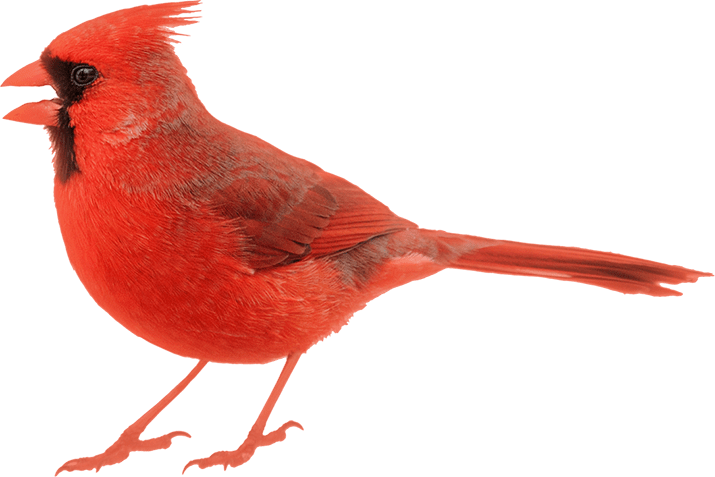
Little birds flitted here and there, not seeming to care that I was power-walking nearby. A woodpecker hammered away on a trunk, sight unseen. A bright red cardinal made an appearance and disappeared completely before I was able to take out my phone to take a picture. It got me thinking about birds…

The small birds who blend into the winter-dead trees have a sweet song and are very beautiful, but in a less glamorous way. If you can be still and creep up to them; they don’t mind getting their picture taken. While the flashy, well-dressed cardinal is not so photo-available and leaves you feeling empty-handed.

Not seen on my walk was the white-grey seagull who gets a bad rap as it divebombs us on the beach or in the Sobeys’ parking lot, looking for any scraps it can find. Its song is not nearly as appealing.

Then there’s the sleek, black crow with its sharp beak and its clever eyes, who cries with its death cry, “Caw! Caw!” as it picks apart roadkill.

Don’t get me started on the pair of pigeons who visit my balcony every morning. You’ve heard of cow-tipping? I am on my way to pigeon-pushing. I open my patio door and yell at them, and it actually requires a step or two onto my balcony to get those birds to listen and leave. I don’t want to push them, but I will. If I have to.

While I have taken a very nice close-up of a Newfoundland seagull, and those pigeons will stand there all day smiling for the camera, these last few species do not often feature in bird artwork, being less attractive to the eye.

Yet, the ones we esteem the highest, such as the cardinal and the blue jay, are elusive and camera-shy.

Our world pandemic has given us time to philosophize, so here I go…

Let’s flip into the human world, applying bird principles. There are the flashy people among us; those beautiful, talented ones who appear on television screens and magazine covers. Unlike the birds, they do like to be photographed and featured in social media. (Ironically, in this social-distancing-world, however, some of them are looking a little plainer without their make-up artists and hair stylists.) In our day-to-day sphere of existence, we don’t see many of those cardinals.

Then there’s the monochromatic gulls and crows who feed off of other people’s losses. They dive in to take advantage when things are tough. They will prey on the weak and steal the life from those who struggle. They are the people who will hack into your computer, loot your cottage, or steal your identity.

The pigeons just stand there cooing. They talk and talk about what’s going on. They communicate their fears and the gossip they’ve heard, and honestly, we’d just like them to go away.

Those little birds who camouflage into the background, don’t stand out in any big way, but they exhibit their beauty through their uplifting words and their service to others. They smile at the people they meet on the walking path and offer to help their neighbours who are afraid to leave their homes during this terrible time.

It is the common, brown-speckled birds, the thrushes and sparrows, who stand out right now. They love their neighbours, and they flitter about helping where they can. Their encouraging words are musical. They are beautiful. Thank you, thrushes. Thank you, sparrows. You make our world a better place.


The Bible mentions at least 11 different birds by name. They are almost always portrayed as smart, resourceful and valuable to God. In Psalm 50:11 God says that He knows every bird on the mountains. We may not see them, but He is aware of every single one. Matthew 10:29 says that He knows when every tiny sparrow falls to the ground. And not only does He know each bird, he takes care of them:

Look at the ravens. They don’t plant or harvest or store food in barns, for God feeds them. And you are far more valuable to him than any birds!

Luke 12:24

As we watch the birds, we notice colour and special features that make each species unique. We may even prefer the look of one over the other. But thankfully, God doesn’t categorize His creation that way – that’s a human way of thinking.

One of the most quoted Bible verses, John 3:16, begins with the words “For God so loved the world…” He doesn’t see colour or race in His creation.

He sees people.

And He loves them all.

Just a Number

I wrote an article for our community paper last month called “Finding the Good.” It represents my optimistic outlook on life, pointing out the positives that we can find in this global pandemic. It’s a light piece with some humor, which I look back on today with gritted teeth. I will include it at the end of this post, if you’re interested in reading it.

Optimism : an inclination to believe in the most favorable outcome. Related words: brightness, cheerfulness … hope… idealism.

Merriam-Webster Thesaurus

Aren’t those beautiful words to frame your life? Who doesn’t want to live under sunny skies all the time; in a world of cheerful hope and a belief in everything turning out okay? I’m an optimist by nature, but even more so as a child of God. Yet, today on Val’s Stage, I’m feeling a little shameful.

I can write an uplifting article about finding the good and display my optimism on my stage quite easily. The setting for my stage is a condo in the sky with an amazing view. It includes a happily married couple who have raised three boys and are watching them build their own nests and find their way in life. No one in my family has been harshly impacted by COVID-19. Haven’t we all at some point said, “I wish I could work from home?” We’re not hurting here.

This week I’ve been thinking about numbers. You’ll see how this relates to my shame in a minute.

I went for a blood test at the hospital one day not too long ago, and after passing in my paperwork, I was asked to take a number.

“I have an appointment,” I told the receptionist.

“Take a number and have a seat,” she repeated.

I had indeed filled in an online form for a specific time to get my blood test done. I was there at the appointed time. The website told me to inform the clinic that I had an appointment. So, why was I now holding a number that deviated from the one being served by nearly twenty?

I sat there in irritation, listening to each number get called in the correct order and watching newcomers take their number and join me in the waiting area. I had made an appointment. How did I become just another number? I’m supposed to be special, I thought, although not in those words. My name should be called, not a number.

When I approached the counter to inquire about this terrible injustice, the response was “Oh, we don’t take appointments here.” She barely looked at me. Her actions said, “Go back and take your seat, Number 49.”

Number 49 puzzled over why there would be a specific form on the clinic’s website to give me hope for a shorter wait: to make me think I had the Fast-Track Pass for the ride at Disney.

It’s not fun being identified by a number. There’s nothing personal about it. Someone else was number 49 just the day before, and a new person would be 49 the day after I wore the title. Where’s the humanity in that?

Numbers have become a huge part of our lives during this pandemic. “What are the numbers like today?” we ask. The numbers tell us about new COVID-19 cases and deaths, locally and worldwide.

We do our part to help flatten the curve and keep our eyes on the numbers. There were only 405 confirmed new cases in Canada yesterday; only 34 deaths. This is great, we think. The numbers are giving us hope; giving us optimism that this is going to be over soon; that we can go back to our normal lives and move on from this.

But just like when I held that piece of paper that identified me as number 49, there were people identified with numbers 1 through 34 yesterday. But at their medical appointments, someone spoke the words, “Time of death…”

34 families mourned a loved one yesterday and are planning a funeral today. Each one of those numbers was a human being killed by the coronavirus. Almost 8000 people in our country have had their lives snuffed out, leaving behind mothers, fathers, brothers, sisters, husbands, wives, and children.

Not so long ago, 22 victims of the shootings in Nova Scotia were mourned by the nation. Their pictures were in the news for days; their stories told for us to hear; their loved ones given the opportunity to talk about the one whose life had been so unjustly taken.

Each of those 34 families yesterday felt that same pain. Have we stopped mourning? Have we reduced their loss to numbers? Those 34 were individuals. They were people.

Optimism has its place, but realism anchors us in this world. It prevents us from losing sight of other people’s plights; their realities. I take a knee on Val’s Stage today and pray for 8000 Canadian families who have lost a loved one; 413,000 families worldwide.

These are not just numbers. These are people who can’t “find the good” in this pandemic.

These are people who are no longer with us.

Please forgive our apathy.

Rejoice with those who rejoice, mourn with those who mourn.

Romans 12:15

Praise be to the God and Father of our Lord Jesus Christ, the Father of compassion and the God of all comfort, who comforts us in all our troubles, so that we can comfort those in any trouble with the comfort we ourselves receive from God.

2 Corinthians 1:3-4

Finding the Good

By Valda Goudie, VISTAS

We see the ghost town parking lots of small businesses; we don masks and gloves to pick up groceries; and strangers avoid meeting our eye as we pass them on walks – like eye contact would somehow put them at risk. We might be tempted to think, “What could possibly be good about this pandemic?” I’ve always believed that finding the good in terrible situations is a healthier way to navigate through them. So, this is me – finding the good, in no particular order of significance.

Sleep. Working from home has given us more time to rest! We have eliminated the commute time, and prep time has been drastically reduced as well. Who needs a perfect hairdo and makeup job to work from home? Our bodies may have been accustomed to less sleep, but I’m sure they appreciate the time to catch up on those zzzzs.

Connectivity of technology. We may not be getting out much, but technology has opened up other ways to see and talk to each other. It’s incredible to host a virtual dinner with our sons and their grandparents in different provinces, all eating at the same time (while in different time zones) and interacting together. We honestly hadn’t thought of that possibility before now. No one has to worry about drinking and driving when parties or book clubs are hosted virtually!


Environmental effects. The air quality all over the world has improved as people park their cars and stay at home! The Earth thanks us.


Family time. In our busy society with most families having two parents working outside of the home, while it may not seem like it at times, this lockdown is a gift to families. Even when they are working from home, the opportunities are there to eat lunch together, to take a break and do an activity or go outside. Just having their parents physically present is such a gift of well-being and security for young children.


Education. Homeschooling may have given parents a new sense of appreciation for teachers! It is likely that it has also enlightened some parents to their child’s strengths and weaknesses. They are able to see for themselves what their teachers have been telling them about their child as a student. Their children are getting one-on-one support in areas of need which the school can’t always give them.


Appreciation for health care workers and other essential services. We are more aware of and grateful to those who put themselves at risk daily during this time. Physical messages are posted all over our community saying thank you!


Awareness of some of the flaws in the system. Discovering some of the gaps in our system, especially in caring for our older population, will hopefully mean positive change in the future. I think as a nation, we are appalled and apologetic for not paying more attention to our vulnerable populations.


Stopping to smell the roses. Literally. People are getting outside more. They are enjoying nature, taking pictures of birds, noticing the new leaves on trees, smelling the flowers.


Relaxing Bodies. Our hair is healthier than ever if, like me, you haven’t plugged in a hot iron in months and you avoided going to the drug store to buy your own hair dye. And just consider all the happy boobs. Yes, boobs are dancing delightedly all over Ottawa singing, “We’re free! We’re free!” I hear your Amen, sisters, while echoes of “Where? Where?” bounce off rooftops. We may have a Burn-your-Bra movement happening before we all go back to work.


Online church services – I love going to church in my bathrobe and slippers! Churches are reaching more people with a Good News message this way.


Neighbourly love and concern. Cooking meals for those in need, making donations or helping out at food banks; doing grocery runs for those who can’t go out for themselves; ordering in more often to support local businesses; look at all the ways we are supporting each other! Will we be a closer-knit community when this is over?


Unity as a nation. Way to go, Canada! Some would say our leaders are doing what they can in a situation they can’t predict. They are attempting to keep us safe, while supporting us financially in many cases. While our prime minister may go down in history as the one who reminded us to protect others while talking ‘moistly,’ other leaders of great nations will be immortalized for much bigger issues.

Closing Remarks
Our dear readers who have faced the coronavirus head-on with your own health, or that of love ones; some of you even possibly mourning a death during this time, on behalf of VISTAS, I would like to say we are sorry you’ve faced this hardship. My light tone above is not meant to belittle the suffering this world pandemic has caused.
We are very proud of how our community has united to follow our leaders’ directives to stay at home and protect ourselves and others when we do have to go out. You will read stories in this issue of heroes who have made a positive difference in the lives of others, in lightening the load and providing help to neighbours. We are so proud of you…

Back-to-School Dread

I press a button on my suit to release a slow stream of oxygen into my helmet, savoring the freshness of it.

Sam is crying again. His visor has fogged up, and a steady stream of tears and snot run down his face and disappear past the glass and into the depths of his helmet and neck brace.

I resist the urge to sigh and steam up my own space, negating the effects of my oxygen-shot. Sam has been crying all morning. He misses his mom. I get it. He’d been home with her for almost a year before we were finally able to open the schools.

I guess my break is over then. The teacher covering me is either oblivious to his misery or she’s ignoring it. I think wistfully about the days when I would leave the room on my break – isn’t that what “break” means? Now it’s not worth the energy to trek down the hall in this heavy suit. Who really wants to sit at the staff charging station and stare at my colleagues through a fully enclosed helmet, ensuring that my audio channel is tuned into the adults-only stream only to listen to complaints of my own that I don’t require someone else to voice?

Instead, twice a day I sit where my desk used to be and plug into the classroom charging station. At least I can turn off the audio input completely and take a break from the noise.

Sam’s breathing is coming in gasps. I raise my hand to signal Mrs. Rose, hoping to alert her to his situation, but she is in the other corner of the room dealing with a sharing issue.

I pull the cord and hastily tuck it into the waist panel of my suit, not bothering to wind it up neatly as we were shown.

I turn on my audio and microphone before releasing the extender arm – sending my go-go-gadget-hand toward the crying boy. I pat his shoulder with three impersonal taps, understanding why they give him no comfort. It’s no replacement for a hug.

“It’s okay, Sam. You’ll see Mommy soon. Why don’t we go to the building corner and make a tower? I bet you can’t make one as tall as yourself!”

Sam looks me in the eye as another huge tear splashes on his cheek. He shakes his head, but pauses his sobbing.

“L-l-eg-go?” His eyes plead as he stutters the request.

“I’m sorry, Buddy. You know we had to put the Lego away. The pieces are too small for us to handle with our gloves.”

A fresh shower occurs inside Sam’s helmet. I feel like I’m watching him drown inside a washing machine, unable to save him.

I use the extender arm to push his oxygen button. He could use a good dose of air in there about now.

My next series of shoulder pats is interrupted with the automatic lowering of our face monitors while the instruction to stand for the playing of O Canada is piped into our helmets.

The children in the puppet area struggle to get to their feet in the bulky suits. As the anthem plays, we watch scenes of our country flash across our screens – beautiful lighthouses, oceans, mountains, forests; places we can only visit virtually since travel outside of our city was banned. I’m reminded daily at this time of how upset people were back in the beginning when they couldn’t cross the border into Quebec to visit their cottages. Little did we know…

As the last notes of “We stand on guard for thee” linger in my ears, I notice my colleague staring at Sam with a look of horror on her face.

I turn to find the inside of his visor covered in vomit. His crying has made him sick.

“Oh, no!” I say the words aloud instinctively, forgetting how good our audio systems are. All ten little faces look at me, hearing the fear in the tone of my voice.

Mrs. Rose is halfway across the room, heading for the communication panel next to the door. The Containment Team is to be notified immediately of illness.

I gasp and send my extender arm to block her path. “He’s not sick!” I hiss, wishing we were both on the staff channel.

I look at the pale faces staring at Sam or at me. Bella and Jennifer are crying now too. They undoubtedly remember what happened last week when the Containment Team took Cole away. It will be another ten days before they see their classmate again; before his family sees him again.

If one of our isolation chambers is not available, Sam will be taken to the nearest Clinic to isolate there for the two-week period.

“Sarah, please!”

But Mrs. Rose skirts around my attempt to bar her way and reaches the panel, pressing the big red button before she looks at me. Her eyes are sad, but her mouth is drawn in a line.

“No exceptions. That’s the rule, Val. If a child is sick, they have to go immediately.” She takes a deep breath before continuing. “It’s for everyone’s safety. You know this.”

My eyes blur with tears. “What I know is…” but my words fade into my helmet, knowing they have no purpose. The button has been pushed. They will come.

Sam’s eyes are huge and round. A stronger emotion has taken over the sadness.

There’s nothing I can do. Missing his mom got Sam into this situation, and now he’ll have to wait 14 days before he sees her again.

Jennifer and Bella’s wails need my attention now. With only one extender arm, I randomly swing it to Jennifer, giving her the three shoulder-taps.

“It’s okay, Girls. It will be okay,” I say, not knowing if my words are true.

Bella steps toward Jennifer, her arms outstretched, reaching for her best friend. Before I can stop her, the distance alarm shrills inside her suit loudly enough to penetrate my helmet. She jumps back like she’d been shocked, her cries increasing in volume.

I look to Mrs. Rose for help, but she taps her watch and points to the door. Apparently, my break is over.

As she opens the classroom door to exit, the two men from the Containment Team enter. Their suits are even bulkier than ours, and they look ready for a walk on the moon.

They locate Sam right away, each grabbing an arm.

“Stop!” I cry in desperation. “He’s not ill! He made himself sick from crying!”

Dan raises his eyebrow as he meets my eye. “You know the rules, Val. He’s got to go.”

Sam is screaming now; his little voice piercing in our ears.

His other captor pushes the override volume button on the outside of the six-year old’s suit. The piercing sound stops instantly while Sam’s face continues making the noise.

I watch helplessly as they half drag, half carry my little student down the hall.

A class of Grade 2 students march toward the Team, one behind the other, six feet apart; their heavy boots echoing down the corridor in front of them. The conveyor system will be installed next week to alleviate such noisy disruptions.

The men have turned the corner with Sam. I allow myself a huge sigh. The fog on my visor blinds me to my other students for a few seconds. It gives me time to consider how to explain this to them. Yet, I realize there’s not enough time in the world to do such a thing…

To explain how a tiny virus can cause such upheaval in our world.


We have no idea what a future stage is going to look like, especially while living in today’s pandemic-reality. What actions will I need to make? What words will I have to say? What costume will I be expected to wear? If I fear the future, I ruin my today – I let it steal my joy and peace.

Allowing dread and fear of the unknown to take over can cause our minds to create scenarios such as this back-to-school nightmare (which actually haunted me all day after writing it). I don’t know what my classroom will look like in the fall, or even if we’ll be back at all. Will there be a second wave of COVID-19? A third? Who knows?

Dreading this unpredictable situation will not prevent it from coming, but my mind can make it much worse than it will actually be. It’s kind of silly to torment myself with all the bad things that the future might or might not hold.

I choose to face life with courage and say:

I will not fear, because greater is He that is in me than he that is in the world.

1 John 4:4

A positive attitude in a negative (or even potentially-negative) situation shows our audience that we are different – that having God in our lives brings us peace and joy. After all, not only do we have a future home in Heaven, we have a Father who loves us unconditionally NOW – who’s ready to hold our hand and lead us through any difficulties we have to face.

For God hath not given us the spirit of fear; but of power, and of love, and of a sound mind.

2 Timothy 1:7

Faith and trust in my Father will help me face whatever the future might bring – when it actually gets here.

I choose to enjoy today.

This is the day that the Lord hath made; I will rejoice and be glad in it.

Psalm 118:24

When Everything You’ve Got is Just Not Enough

I stared at the questions on the paper in front of me. I had 20 minutes to write my answers. The provided pen, however, stayed on the table. I was ready for this – guns loaded. A skim-read over the computer-typed words confirmed that I would answer each question in some way, even if it was indirectly. The presentation I had prepared was impressive and more than sufficient.

This wasn’t just about me. This was about maintaining a relationship; being given the opportunity to continue in a partnership that bordered on perfection.

I had almost lost Tammy two years before. When our number of Kindergarten classes was reduced because of low registration, I was given a different assignment for the following year, but my Early Childhood Educator (ECE) lost her job at our school.

She had applied to a school where they were just starting the full-day Kindergarten program, so they had no ECEs yet, and they were hiring seven. Her odds of getting the job were really good. So, I placed my bets and threw my winning hand on the table.

The original version of the 30-minute presentation on my iPad included photos of our program and highlighted the strength of our team – together. I was not promoting myself for that interview – I was promoting our team.

Tammy and I were as different as fish and birds. She wore baseball caps and high-top sneakers, played on a soccer team, and was young enough to be my daughter (if I had started childbearing as a teenager). I brought my students to the gym in high heels, carrying a travel-cup of coffee in my hand, and team sports was not in my vocabulary. The point is: we were very different.

It was our differences, however, that made us a great team. We had that perfect work marriage where one complemented the other. She picked up in the areas where I was weak (Arts, Phys Ed, Child Development); and I focussed more on the academic, weaving the curriculum into our program, having the knowledge and experience of a career with a wide variety of roles. We fit together like 2 pieces of a puzzle. After two years of teaching together, it felt like we shared a brain. We literally finished each other sentences and parroted, “I was thinking the same thing!”

The interviewing principal didn’t have a chance. All the keywords and phrases were in there. The educational jargon mixed beautifully with the photos of children in a successful learning environment. It wasn’t a hard sell. She knew she was getting something special by keeping our team together.

Two years later, however, with the news that our school of over 800 would be severed in half, Tammy’s position was on the chopping block again. It was an unwelcome deja-vu as she put her name in to work at the new school where they needed to hire all new ECEs. I rolled the dice again and applied for the job.

I had updated the slideshow and included in the accompanying three-prong folder unsolicited letters from parents who had expressed their appreciation for our team to the Superintendent, a glowing performance appraisal from my current principal, documentation which showed that videos we’d made as a team were being used in teacher/ECE training, and the written accolades from one that we made with our students which was shown in a conference by our Superintendent in Brazil.

I wasn’t nervous. There was no way an intelligent employer would turn down a ready-made dream team.

She laughed; she nodded her head; she smiled encouragingly. I felt good. I felt confident as I left the conference room.

On the night that the job offers were occurring, Tammy and I sat together and waited. When the phone rang, we held our breath in anticipation, only to discover the caller was a telemarketer. The hours dragged by, until we knew in our hearts that the call wasn’t coming. We cried in each other’s arms. It was over.

We’re still friends, but that was our final year working together.

Why? Why did that principal not see the benefits of a package deal? Why was everything I had, just not good enough?


A job interview can be a terrifying stage. While the principal I spoke about nodded and smiled, the other interviewer in the room wrote down every word I said. Even after I assured her that the words to my script were included in the folder I gave each of them, she kept her head down and wrote for the entire interview, never making eye contact or encouraging me in any way. Whoever came up with this ‘behavioural interview’ idea should be tarred and feathered.

When you get off the stage where you had an audience of two, everyone around you asks how it went; as they formulate their own predictions. When the word comes out that you were unsuccessful, not only are you disappointed with the outcome, you are then embarrassed too. You clearly didn’t give an effective performance.

But, wait! Who was I performing for again? Was it for the people who might judge me, who weren’t even there? Was it for the principal who hired a teacher she knew from her previous school instead of me? Was it for Tammy? For myself?

The Christian attitude in this mess is that I’m a child of God. I did my best with His help. Then I let Him take it from there. If He didn’t work things out for me to have that job, He had something else in mind for me. If I give Him the role of Director in my life, I shouldn’t get overly upset over not receiving a job offer.

Instead, I trust in his promise:

And we know that God causes everything to work together for the good of those who love God and are called according to his purpose for them.

Romans 8:28

However, that “working together” part may not be instantaneous. My next two years without Tammy were difficult, and I really missed our partnership. She too faced challenges with her new teacher team.

Since that night when we cried together, so many things have changed. I work in a new school in another area of town; we moved into a condo and became empty-nesters with our family of five becoming two; I’ve taken up a volunteer role as a newspaper editor and I’ve put more priority on my writing. Tammy is now a mother of three beautiful girls – the last two, identical twins born during the pandemic, and her pre-maternity job was in the federal government, not education.

Did God work things out for our good? I believe He did. And He continues to fulfill His plans in our lives – the long-range ones – for as long as we allow Him to be the Director of our show!